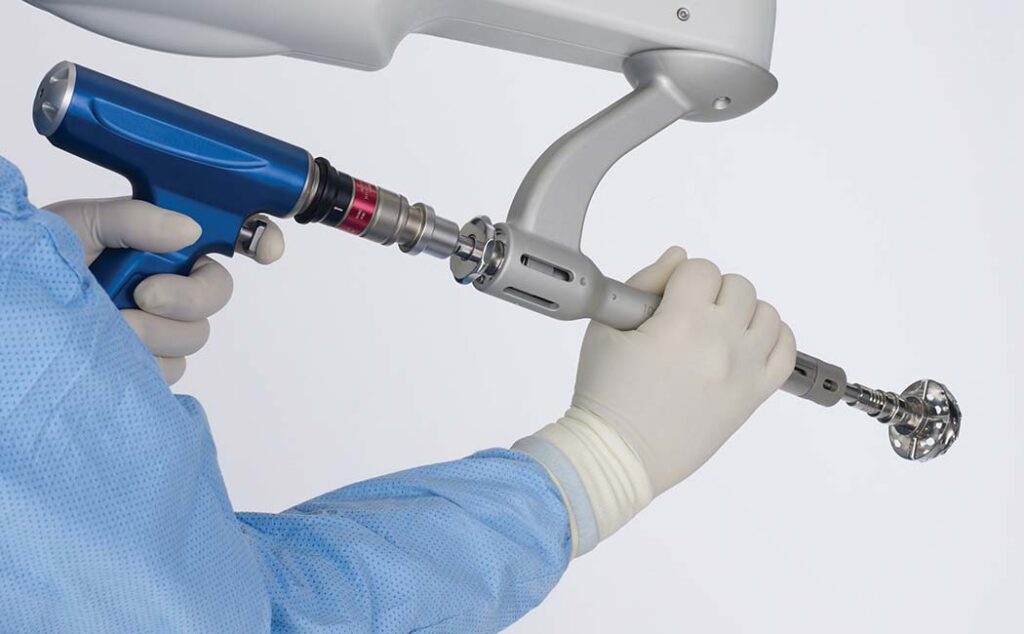
Discover why India is a top destination for robotic knee and hip replacement: world-class surgeons, Mako robotic technology, transparent pricing, faster access, and comprehensive international patient support.
For patients considering robotic knee or hip replacement, India has become a leading global destination. The country combines high surgical volumes, advanced platforms like Stryker Mako, internationally trained surgeons, and end-to-end medical travel support, often at a fraction of Western private healthcare costs.
World-class Expertise at Scale
- High case volumes: Indian centres perform large numbers of joint replacements, building team proficiency and consistent workflows.
- International training: Many orthopaedic surgeons hold fellowships/credentials from the UK, Europe, USA, and APAC.
- Subspecialisation: Dedicated robotic arthroplasty teams for knees, total/partial, and hips, including complex and revision cases.
Advanced Technology, Widely Available
- Robotic platforms: Access to Stryker Mako for knee and hip, along with navigation systems and AI-enabled planning tools.
- Precision planning: CT-based 3D planning and haptic boundaries help optimise alignment, balance, and soft-tissue protection.
- Standardised pathways: ERAS protocols, laminar-flow OTs, and digital dashboards for peri-operative quality metrics.
Transparent, Competitive Pricing
- Significant savings: Total costs are often 50-80% lower than private care in the UK, EU, or Gulf.
- Clear packages: Itemised estimates cover surgeon/anaesthesia fees, OT charges, standard implants, hospital stay, and inpatient rehab.
- Robotic add-on: Robotic assistance is priced as a distinct package; patients can compare conventional vs robotic options before deciding.
Faster Access and Predictable Timelines
- Minimal wait times: Remote triage and video consults enable scheduling within weeks, not months.
- Streamlined visas: Medical visa letters and coordinator support simplify planning for patients and companions.
Internationally Benchmarked Quality and Safety
- Accreditation: Many hospitals are NABH and/or JCI accredited.
- Protocols: Antibiotic prophylaxis, DVT prevention, checklists, and incident-reporting systems are routine.
- Outcomes focus: Centres track PROMs, length of stay, readmissions, and complication rates to drive continuous improvement.
English-first Communication and Cultural Comfort
- English-speaking clinicians and staff; interpreters for other languages.
- Dietary and faith accommodations; companion-friendly arrangements.
Comprehensive Medical Travel Ecosystem
- Airport proximity and hotel networks near major hospitals.
- Dedicated international patient coordinators for estimates, admissions, local transport, and insurance documentation.
- Tele-rehab and structured remote follow-up after you return home.
What Procedures Are Commonly Offered
- Robotic total knee replacement (TKR) and partial knee replacement (UKA)
- Robotic total hip replacement (THR)
- Complex primary and revision arthroplasty, with robotic suitability decided case by case
Typical Cost Guidance (Indicative)
- Standard TKR, per knee: USD 4500
- Robotic-assisted TKR, per knee: USD 5000
- Bilateral TKR, same admission: USD 7000
- THR pricing varies by implant/approach; written quotes are provided after review.
Note: Final costs depend on implant tier, room category, complexity, and length of stay.
Your Step-by-step International Pathway
- Share records: X-rays/CT/MRI, medical summary, medication list, with 24-48h review.
- Video consult: Candidacy, risks/benefits, conventional vs robotic options, and package estimate.
- Visa and booking: Medical visa letter, surgery date, and pre-op checklist.
- Arrival and pre-op: In-person exam, imaging/CT for robotic planning, and anaesthesia clearance.
- Surgery and stay: OT time around 60-120 minutes; typical hospital stay 2-4 days for unilateral cases.
- Local recovery: Remain 7-14 days for follow-ups and flight fitness.
- Remote follow-up: Video review at 2 weeks, 6 weeks, 3 months, 6 months, and 1 year.
Frequently Asked Questions
Is the robot doing the surgery?
No. The surgeon remains in full control; the robot provides planning, guidance, and safety boundaries.
Is robotic better than conventional?
It can improve alignment accuracy and consistency; your surgeon will advise if you will benefit based on anatomy and goals.
Is it covered by insurance?
Coverage varies. Many private policies cover joint replacement; robotic fees may be policy-dependent. Hospitals provide full documentation for reimbursement.
How soon can I travel home?
Usually 7-14 days after surgery once cleared for long-haul travel and DVT prevention is in place.
How to Choose the Right Centre
- Surgeon credentials: Fellowship training, volumes, revision experience
- Technology: Availability of Stryker Mako or equivalent, and on-site service support
- Transparency: Written, itemised estimates and clear inclusion/exclusion lists
- Outcomes: Published data or routinely tracked KPIs
- Support: Dedicated international coordinator, visa help, and tele-follow-up
Call to Action
Considering robotic knee or hip replacement in India? Share your reports for a personalised surgical plan and a written, itemised estimate within 24-48 hours.
- Email: docrohitlamba2685@gmail.com
- WhatsApp/Phone: +91-9999228285
- International Patient Desk: Fortis Hospital, Manesar, Gurgaon
- Response time: 24-48 hours
Disclaimer: This article is for information only. Final recommendations are provided after a full clinical evaluation.