Advanced Total Knee Replacement for Pain Relief and Better Mobility
If your knee is severely damaged by arthritis or injury, even simple activities like walking, climbing stairs, or getting up from a chair can become difficult. Total knee replacement is a safe and effective procedure designed to relieve pain, correct deformity, and help you return to normal life when conservative treatments no longer provide enough relief.
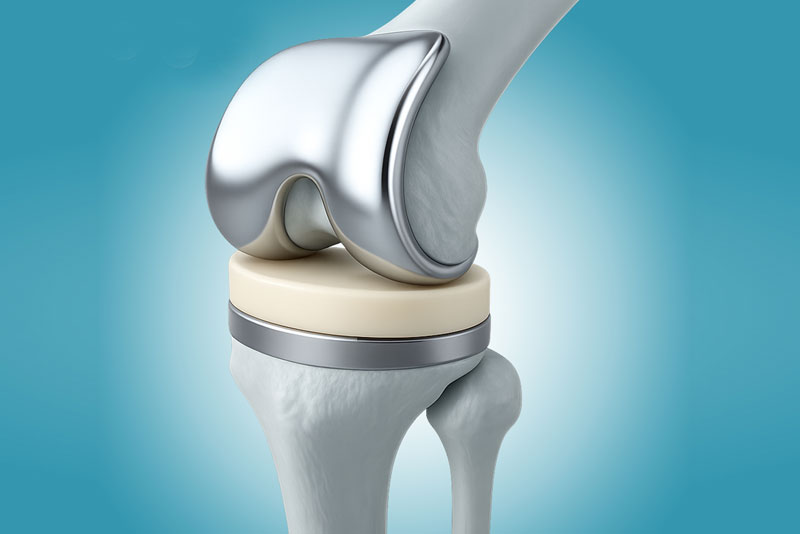
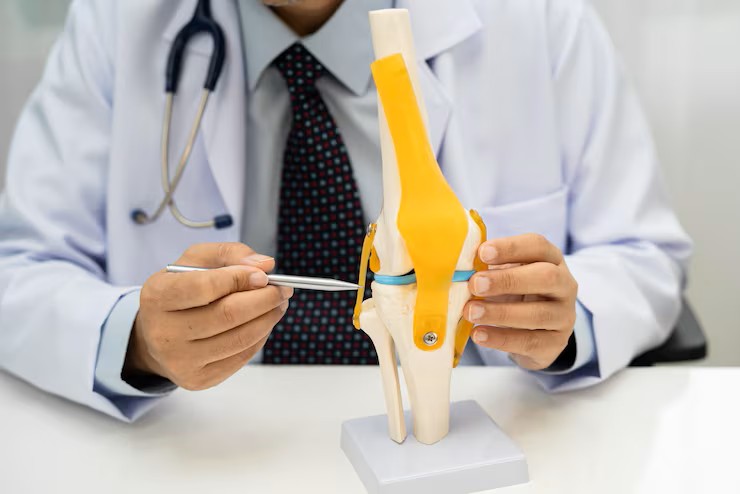
Understanding the Knee Joint
The knee is the largest joint in the body and is essential for most everyday movement. It is formed by the lower end of the femur, the upper end of the tibia, and the patella. Smooth articular cartilage covers these surfaces to allow painless motion, while the menisci act as shock absorbers. Ligaments provide stability, muscles add strength, and the synovial membrane releases fluid that lubricates movement. When this harmony is disrupted by injury or disease, pain, stiffness, weakness, and loss of function can follow.
What Causes Chronic Knee Pain?
The most common cause of long-term knee pain and disability is arthritis. Although several forms exist, most knee pain requiring replacement is linked to osteoarthritis, rheumatoid arthritis, or post-traumatic arthritis.
Osteoarthritis
This age-related wear-and-tear arthritis causes the cartilage to soften and wear away, leading to pain, stiffness, and bone-on-bone friction.
Rheumatoid Arthritis
Inflammation of the joint lining can gradually damage cartilage, resulting in chronic pain, swelling, and stiffness.
Post-Traumatic Arthritis
Previous fractures or ligament injuries may damage the knee cartilage over time, causing long-term pain and reduced knee function.
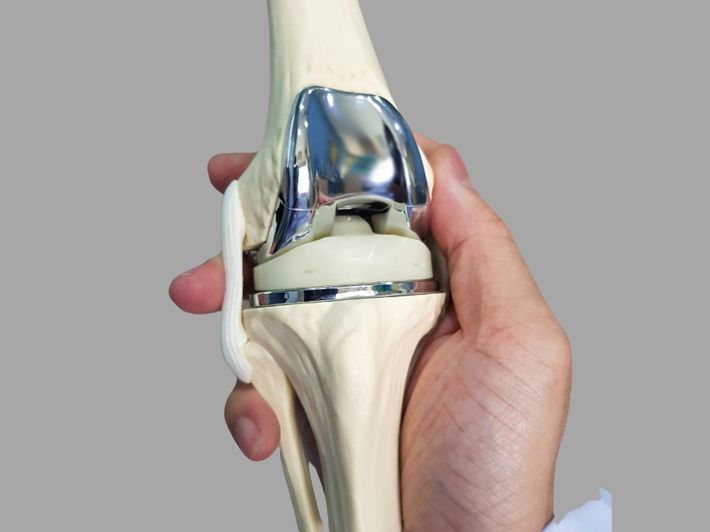
How Total Knee Replacement Works
A knee replacement, also called knee arthroplasty, is more accurately a resurfacing procedure in which damaged joint surfaces are replaced to restore smoother motion.
Prepare the Bone
Damaged cartilage at the ends of the femur and tibia is removed along with a small amount of underlying bone.
Position the Implants
Metal components are placed to recreate the joint surface and may be cemented or press-fit depending on the case.
Resurface the Patella
The underside of the kneecap may be resurfaced with a plastic button depending on the surgical plan.
Insert the Spacer
A medical-grade plastic spacer is placed between the components to create a smooth gliding surface.
When Surgery May Be Recommended
The decision for total knee replacement should be made together with your family, primary doctor, and orthopaedic surgeon. Surgery is usually considered when symptoms strongly affect daily function and other treatments have failed.
- Severe knee pain or stiffness that limits walking, climbing stairs, and getting in or out of chairs
- Moderate or severe knee pain while resting during the day or night
- Chronic knee inflammation and swelling that does not improve with rest or medicines
- Knee deformity such as bowing in or out of the knee
- Poor improvement with anti-inflammatory medicines, injections, physical therapy, or previous procedures
Who Can Benefit From Surgery?
There are no absolute age or weight restrictions for total knee replacement. Recommendations are based on pain, disability, and quality of life rather than age alone. While many patients are between 50 and 80 years old, the procedure has been performed successfully across a wide age range depending on the individual condition and need.