Leg-Length Discrepancy
A meaningful difference in leg length that affects walking, posture, joint loading, or daily function.
A carefully planned orthopaedic pathway for selected patients with limb-length discrepancy, post-traumatic shortening, deformity, or complex bone-healing problems. Every recommendation follows clinical examination, standing X-rays, and an individual discussion of goals, risks, rehabilitation, and expected treatment duration.
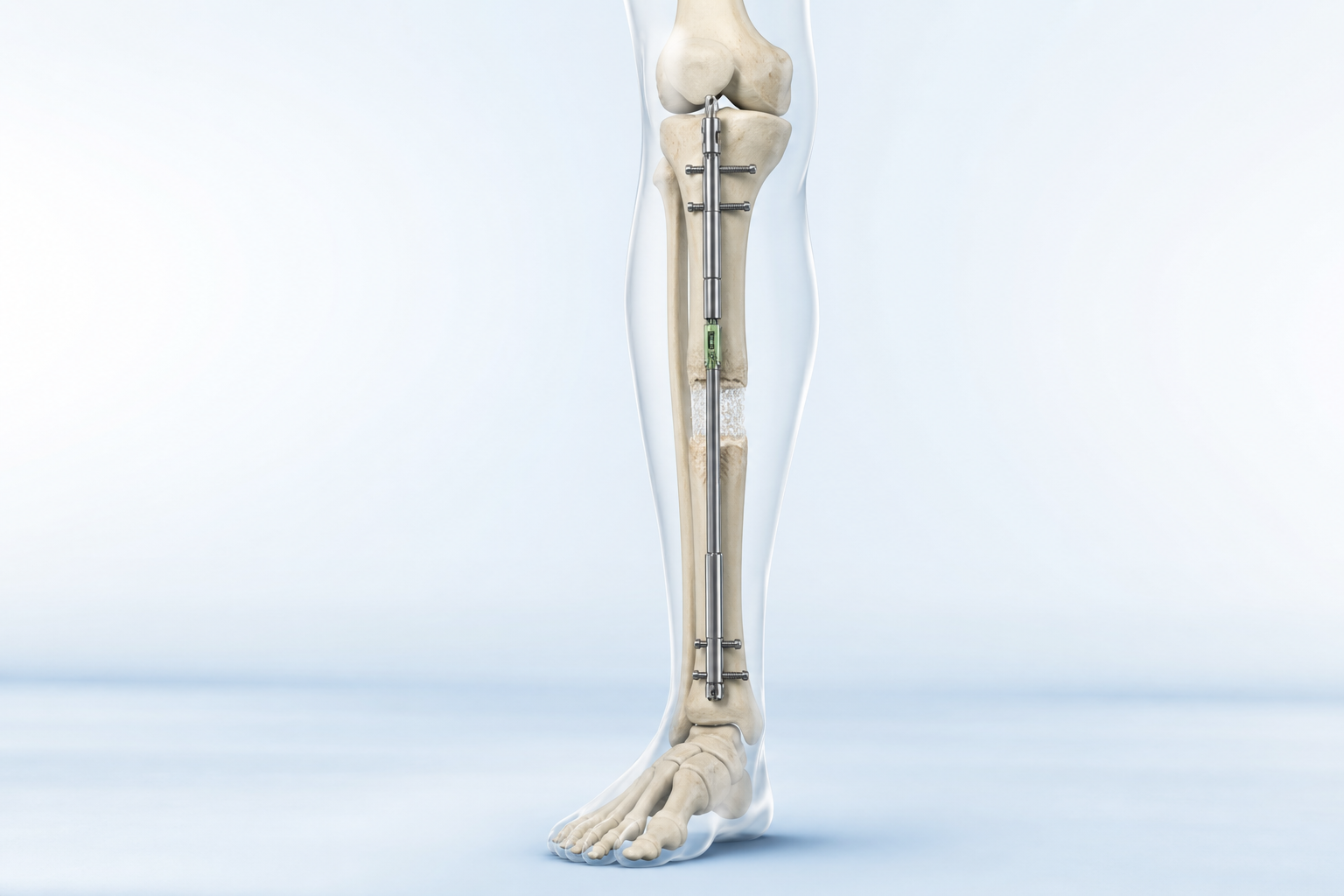
Limb lengthening is a specialist reconstructive procedure in which a bone is divided in a controlled manner and gradually separated so the body can form new bone in the developing gap. The surrounding muscles, nerves, blood vessels, and skin adapt progressively. Depending on the diagnosis, treatment may use an internal lengthening nail or an external fixation system. The method and achievable correction are determined only after a detailed assessment.
Evaluation may include medical history, gait and joint examination, measurement of limb lengths, standing alignment X-rays, and additional imaging when required. The surgeon assesses bone quality, joint movement, soft-tissue flexibility, previous surgery or infection, general health, and the patient's ability to participate in frequent follow-up and physiotherapy.
Limb lengthening is a major reconstructive treatment and is recommended only when the expected functional benefit justifies the demands and risks of the process.
A meaningful difference in leg length that affects walking, posture, joint loading, or daily function.
Shortening or deformity after a fracture, previous surgery, malunion, or complex injury.
Selected limb-length or alignment differences present from birth or developing during growth.
Selected cases involving bone loss, nonunion, or combined shortening and deformity correction.
The technique is chosen according to the bone involved, amount and direction of correction, age, previous procedures, bone canal anatomy, soft tissues, and overall treatment goals.
A telescopic nail is placed inside the bone and gradually lengthened using its approved control system. This avoids external pins but is not suitable for every bone, deformity, age group, or anatomical situation.
A frame outside the limb is connected to the bone using pins or wires. It can support gradual lengthening and deformity correction, but requires careful frame adjustment, pin-site care, and close monitoring.
Limb lengthening is a staged process rather than a single operation. The timeline varies with the diagnosis, correction required, healing response, and rehabilitation progress.
Confirm the cause and amount of discrepancy, evaluate alignment and joints, and discuss realistic treatment goals.
The bone is divided in a controlled way and stabilised with the selected internal nail or external fixation system.
After an initial healing interval, gradual distraction begins according to the surgeon's schedule with regular clinical and X-ray checks.
Once the planned correction is reached, the new bone is allowed to strengthen while weight-bearing and activity progress are guided.
Physiotherapy, stretching, strengthening, gait training, and continued follow-up support safe functional recovery.
Regular physiotherapy is central to maintaining joint movement, muscle length, strength, and walking pattern throughout treatment. Weight-bearing instructions depend on the device, bone quality, and stage of healing. Patients need scheduled clinical reviews and X-rays, and should report increasing pain, swelling, wound or pin-site concerns, altered sensation, or reduced joint movement promptly.
Limb lengthening is complex and complications can occur even with careful planning. Individual risks and alternatives must be discussed with the treating surgeon before deciding on surgery.
Bring previous X-rays, scan reports, operative notes, and details of any earlier injury or infection. A consultation can clarify the cause of the limb-length difference, appropriate investigations, and whether reconstruction should be considered.